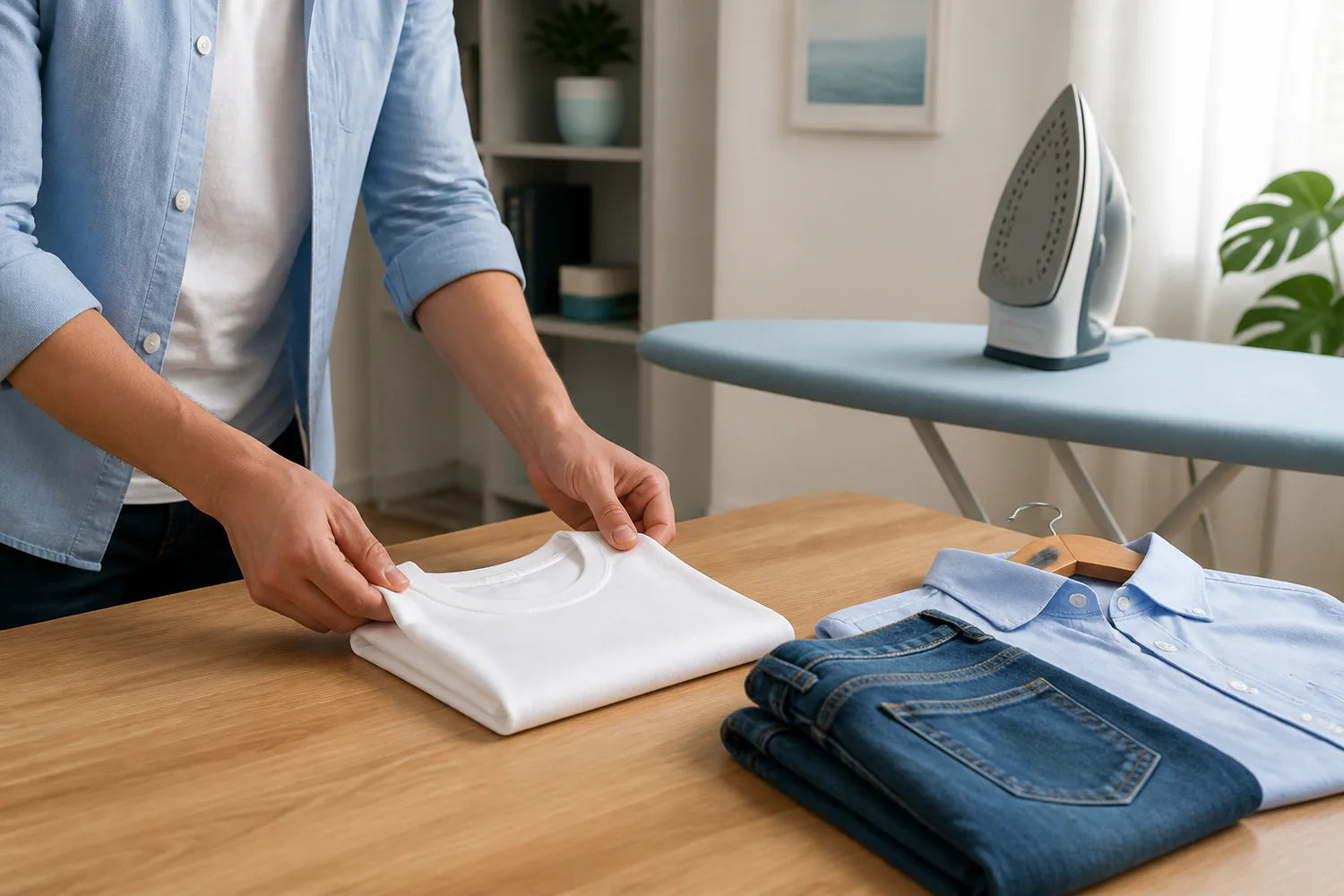
Clothing care
Folding clothes soon after drying limits new creases and keeps drawers organised. If ironing is needed, the care label determines whether it is allowed and which maximum temperature applies.
Fold knitwear, T-shirts and sturdy everyday trousers when they are fully dry. Hang shirts, dresses and other crease-prone garments with enough room around them. Before ironing, check the iron symbol and start with the lowest permitted temperature.
Fold T-shirts and shirts
T-shirt
- Lay the T-shirt flat and smooth the fabric by hand.
- Fold each side towards the centre and place the sleeves flat.
- Fold the bottom towards the shoulders.
- Fold once more to suit the drawer depth and store horizontally or upright.
Shirt or blouse
- Fasten a few buttons and place the garment face down.
- Fold one side inward and lay the sleeve along the body.
- Repeat on the other side, keeping the collar flat.
- Fold the lower section upward without pressing a hard crease into the collar.
Fold trousers and jeans
Place the legs together, align the seams and smooth the pockets. Fold in half from ankle to waistband and then once or twice more depending on the available storage space. Hang formal trousers if folding creates an unwanted crease.
Fold or hang? A practical choice
- Fold
- T-shirts, knitwear and sturdy jeans. Flat storage helps stretch-sensitive knitwear retain its shape.
- Hang
- Shirts, blouses, dresses and other garments that crease easily. Leave enough space so they are not pressed together.
- Check first
- Heavy, lined or unusually constructed garments. Let the shape, weight and manufacturer’s care instructions determine the method.
Iron clothes safely
Check the iron symbol before starting. GINETEX specifies maximum sole-plate temperatures of 120°C for one dot without steam, 150°C for two dots and 200°C for three dots. A crossed-out iron means the garment must not be ironed. The care label takes priority over assumptions about the fibre.
- Start with the lowest temperature items and increase the setting gradually.
- Test pressure-sensitive or dark fabric on an inconspicuous area.
- Use a clean pressing cloth where the label or finish calls for extra care.
- Let ironed garments cool before folding or hanging them.
How to iron sleeves without creating a double crease
- Open the cuff and iron it flat according to the care label.
- Lay the sleeve along its seam and smooth the fabric.
- Iron from cuff towards shoulder without pressing the outer edge hard.
- Rotate the sleeve and finish the remaining section.
How to iron formal trousers without unwanted shine
- Check the care label, empty the pockets and close the fastening.
- Turn the trousers inside out or use a clean pressing cloth on dark or pressure-sensitive fabric.
- Align the seams and work on one trouser leg at a time, pressing in sections rather than dragging the iron.
- Only create a centre crease when that crease is part of the garment’s intended finish.
- Hang the trousers and let them cool completely before wearing or storing them.
The temperature guidance is based on the international care-labelling information from GINETEX; the practical method was checked against the Consumentenbond ironing guidance and the clothing-care advice from Milieu Centraal. Always follow the garment label and appliance manual.