Washing-machine care
A musty washing machine is usually not a mysterious fault. Moisture can mix with detergent, fabric-softener, body-oil and lint residue. This build-up may remain in the door seal, detergent drawer, pump filter and less visible parts of the machine. If you mainly notice a drain smell, standing water or recurring error codes, the cause may be the drain or a technical component.
Remove the laundry, inspect the door seal, detergent drawer and pump filter, and clean each part according to the appliance manual. Then run the manufacturer’s empty drum-cleaning or maintenance programme. Do not treat a dishwasher tablet, vinegar or soda as a universal solution: instructions differ by machine and an unsuitable product can damage components or leave too much foam and residue.
How to remove the musty smell
Carry out this complete clean in the following order:
- Empty the machine and unplug it.
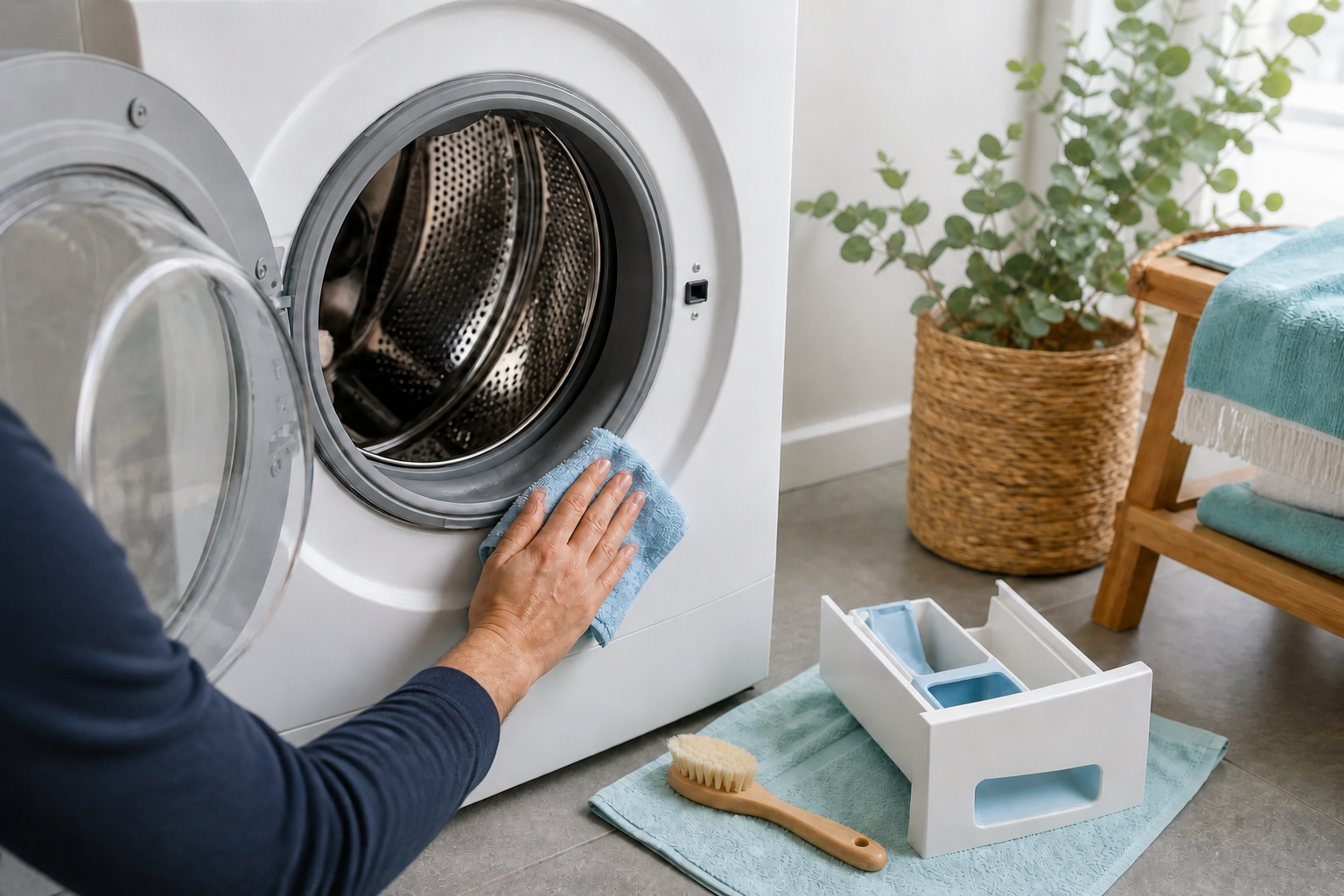
- Clean the door seal with warm water and a soft cloth. Carefully open the folds, remove lint and dirt, and dry the seal afterwards.
- Remove the detergent drawer. Rinse it under warm running water, remove built-up residue with a soft brush and clean the drawer opening.
- Clean the pump filter. Let the water cool first. Place towels and a low tray nearby, drain the remaining water and refit the filter securely.
- Plug the machine back in and run an empty maintenance programme. Select Drum Clean, Tub Clean or the equivalent programme. If the machine has no such programme, use a washing-machine cleaner and follow its packaging and the appliance manual exactly.
- Dry the drum and seal afterwards. Leave the door and detergent drawer open for a few hours when this is safe for children and pets.
If the machine still smells like a drain or water remains inside, the cause may be the drain hose, trap or pump. Have this checked instead of adding another cleaning product.
Why does a washing machine smell?
A musty or greasy smell often comes from damp residue in the seal, drawer or filter. Grey-brown build-up can consist of dirt, grease, detergent residue and microorganisms. A distinct drain smell may come from the drain hose, trap or household drain. If only the laundry smells musty, also check whether the drum is overloaded, the programme is suitable and the laundry is dried promptly after the cycle.
Clean a washing machine safely in 6 steps
- Read the manual and empty the drum. Look for cleaning, maintenance, drum cleaning and pump-filter instructions. Switch the machine off and unplug it before cleaning removable parts.
- Wipe the door seal. Carefully open the folds and remove lint, hair and small objects with a soft, damp cloth. Warm water is often sufficient. Dry the seal afterwards.
- Clean the detergent drawer. Remove it if the manual permits. Rinse it under running water and use a soft brush for built-up residue. Clean the opening and refit everything correctly.
- Clean the pump filter according to the manual. Let the appliance and water cool first. Place towels and a low tray by the service flap, drain the remaining water and refit the filter and cap securely.
- Run the prescribed maintenance programme. Keep the drum empty and select Drum Clean, Tub Clean or the name used in your manual. Add only the product and quantity specified for your model. Some programmes must run without normal detergent.
- Let the machine dry. Wipe away moisture and leave the door and detergent drawer slightly open for a short time when this is safe for children and pets.
Dishwasher tablet, vinegar or soda: what is suitable?
Dishwasher tablet: preferably not
A dishwasher tablet is formulated for a dishwasher, not a washing machine. Bosch warns that unsuitable descalers, including dishwasher tablets, can cause material damage. The Dutch Consumers’ Association also recommends using a cleaner intended for washing machines. A dedicated washing-machine cleaning tablet is a different product; use it only when the manual allows it.
Vinegar and citric acid: do not use as standard
Bosch advises against acidic household products because they can affect rubber components. A manufacturer may allow a diluted solution for a specific removable part, but that is not general permission to pour cleaning vinegar into the drum.
Soda: no universal dose
There is no manufacturer-independent quantity proven safe for every machine. Use washing soda or baking soda only when the appliance manufacturer explicitly recommends it.
A suitable washing-machine cleaner: sometimes
Choose a product intended for your machine type and follow the stated dose, compartment and programme exactly. Never mix cleaning products. In particular, do not combine acidic products such as vinegar with chlorine bleach, as dangerous fumes may form.
How to keep the washing machine fresh
- Remove laundry promptly after the cycle and allow moisture to dry.
- Dose according to the load, soil level and water hardness. More detergent does not automatically clean better.
- Rinse the detergent drawer regularly, wipe the seal and clean the pump filter according to the manual.
- Use the machine’s maintenance reminder or cleaning programme.
- Milieu Centraal recommends a 60°C wash with white washing powder containing bleach once a month. Only do this with suitable white laundry whose care labels permit 60°C.
Frequently asked questions
Can a FashFresh laundry capsule clean the washing machine?
No. A laundry capsule is intended for washing textiles and does not replace a washing-machine cleaner. Do not run an empty cycle with a capsule unless both the appliance manual and product instructions explicitly say to do so.
How often should a washing machine be cleaned?
Follow the reminder and manual for your model. The interval differs by brand and machine. The drawer, seal and filter may each have their own maintenance schedule.
When is an engineer needed?
For standing water, slow draining, leakage, a burning smell, unusual noise or a recurring error code, switch the machine off and contact the manufacturer or a qualified engineer.
Reviewed on 29 August 2026 using maintenance instructions from Samsung Netherlands and Bosch Netherlands, independent guidance from the Dutch Consumers’ Association, advice from Milieu Centraal and Dutch government information on bleach safety. Instructions differ by model; the appliance manual always takes priority.